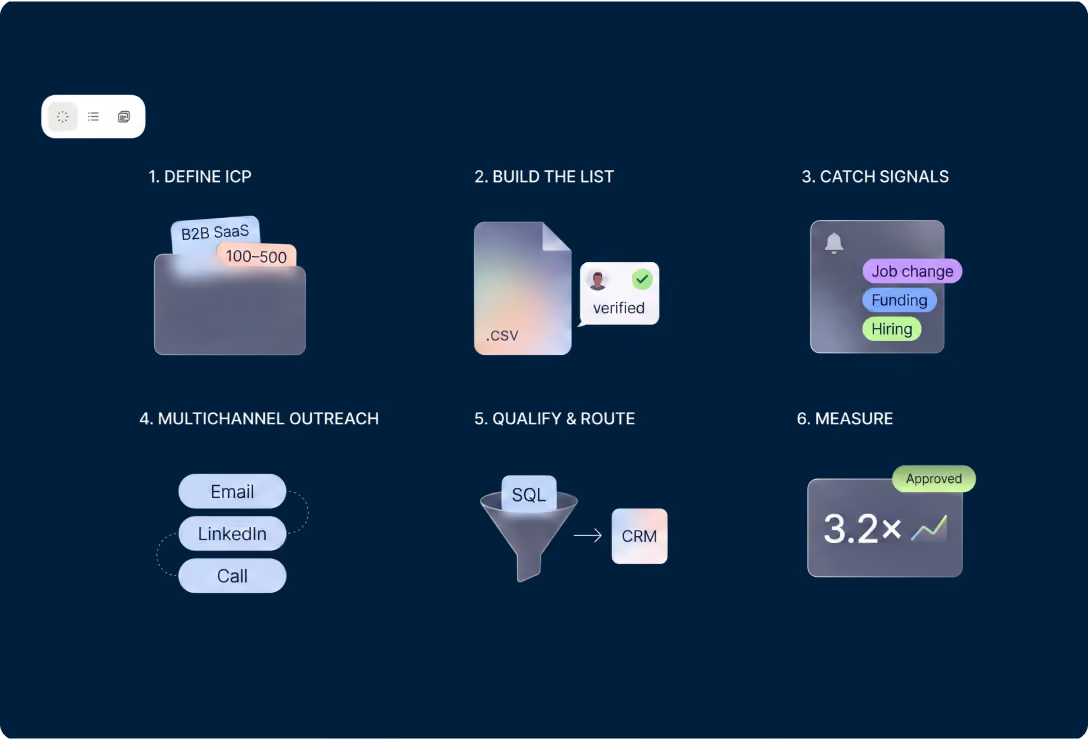
B2B lead generation turns strangers into qualified pipeline. In 2026 the winners don't do more, they target better, enrich before they reach out, and time outreach to buying signals. This playbook covers MQLs vs SQLs, inbound vs outbound, a 6-step process, the channels that actually convert, and the metrics that prove it works.
B2B lead generation is the work of attracting and converting other businesses into potential buyers for your product. It spans two jobs: generating interest (so the right people raise a hand or get on your radar) and qualifying that interest (so your team spends time only on accounts that can actually buy). Marketing usually owns the top of this, Sales owns the conversion, and RevOps owns the data and routing that connect the two.
A marketing qualified lead (MQL) is a contact the marketing team judges likely to buy based on fit and behaviour, such as downloading a guide or attending a webinar. They have shown interest but are not ready for a sales call. A sales qualified lead (SQL) is an MQL that Sales has vetted and accepted as a real opportunity worth working. The handoff between the two is where most pipeline leaks, usually because the lead reaches Sales with incomplete or stale data.
Use both, on a shared data layer. Inbound captures demand that already exists through content, SEO, ads, and events that pull prospects to you; it compounds slowly and converts warm. Outbound creates demand on your timeline by reaching out to chosen accounts; it is faster to start and fully under your control.
The mistake is running them as separate worlds. The strongest motion enriches and routes inbound leads with the same data and CRM it uses to source outbound, so Marketing, RevOps, and Sales all work from one picture of the market.
Five layers, working together:
The friction most teams feel is that these layers do not talk to each other, so reps tab-switch and copy-paste. A pipeline generation platform like Surfe collapses the data, signal, and workflow layers into one and syncs straight to the CRM.
No single channel wins for everyone, but a few carry most of the weight in B2B:
The channel matters less than the data underneath it. The same enriched, signal-prioritised list makes every one of these channels convert better.
Because a lead is only as good as the data attached to it. The top-ranking guides talk about channels and tactics; almost none of them start where results actually start, with the contact data. A wrong email bounces, a wrong number burns a dial, and a stale record routes the lead to the wrong rep. Verifying contacts against multiple sources is the cheapest uplift available to most lead-gen programs.
This is the case for waterfall enrichment: no single database has verified data for everyone, so Surfe cascades across 15+ providers and triple-verifies each result. One Amazon team reached an average 90% find rate this way, and Bolt's UK team used the same kind of enriched, CRM-native workflow to generate 3x more outbound leads.
Timing is the new sales currency. A lead worked the week something changed, a new executive, a funding round, a hiring spree, converts far better than the same lead worked at random. Most teams never see these triggers because nobody monitors them. Job change alerts surface them automatically and turn a champion who moved companies into a warm re-engagement instead of a dead record.
Track the funnel, not the vanity numbers: MQL-to-SQL conversion, lead-to-opportunity rate, cost per lead, reply and connect rate, and ultimately meetings booked and pipeline sourced. Activity metrics measure motion; these measure progress.
This playbook does not fit a pure PLG motion with no outbound and no sales team to work pipeline. If self-serve drives your growth, invest in product-led loops instead. The playbook earns its keep when you have a defined ICP and people to work the pipeline, and it is the wrong first move while your ICP is still vague.
What is B2B lead generation? The process of finding companies and people who fit your market and turning them into qualified pipeline, through inbound (content, ads, SEO) and outbound (targeted, signal-based outreach).
What is the difference between an MQL and an SQL? An MQL is a marketing-qualified lead that has shown interest but is not sales-ready; an SQL is an MQL that Sales has accepted as a real opportunity worth working.
What is the best channel for B2B lead generation? The professional network is consistently ranked highest for B2B lead quality, but the channel matters less than the verified, signal-prioritised data behind it.
How do you generate B2B leads without a big budget? Sharpen the ICP, enrich a small targeted list well, and time outreach to buying signals. A precise list of 200 worked properly beats 5,000 sent blindly.
Is outbound or inbound better for B2B? Neither in isolation. Inbound compounds and converts warm; outbound is fast and controllable. Run both on a shared data layer.
How do you measure B2B lead generation success? Track MQL-to-SQL conversion, lead-to-opportunity rate, cost per lead, and pipeline sourced, not just lead or activity volume.
Pick one ICP, build one enriched list, and time your first campaign to a buying signal. Start building your B2B pipeline with Surfe, or see how the workflow fits together.
Trelise Mansfield has built and led B2B SaaS marketing teams in New York, London, and Paris. Her range runs from the brand that finds its voice to the campaign that lands to the pipeline number that finally moves. The marketing she rates most is the marketing sales asks for by name. Born in New Zealand. Based in Paris.
%201%20(1)%20(1).avif)