Data Cleansing Best Practices: How to Build a Clean, Revenue-Ready Pipeline
Bad data doesn’t just slow your team down — it actively kills deals. When your CRM is full of duplicate contacts, outdated job titles, and missing phone numbers, your reps aren’t just wasting time. They’re making decisions from a broken map. Data cleansing is the process of fixing or removing incorrect, corrupted, duplicate, or incomplete data from your systems — and for modern sales teams, it’s not optional. It’s the foundation your entire go-to-market motion runs on.
This guide is for revenue operators, RevOps leads, and SDR managers who are done tolerating dirty data and ready to build a systematic data cleaning process that scales. By the end, you’ll have a clear framework to identify errors, remove noise, standardize your records, and keep your pipeline clean automatically — including the data cleansing best practices that separate high-performing revenue teams from those constantly fighting fires. You’ll also see how data enrichment fits into that process — turning clean records into actionable intelligence — so your team can focus on selling, not scrubbing.
What Does Data Cleansing Actually Mean for Sales Teams?
Most definitions of data cleansing live in the world of data engineering. But if you run a revenue team, the impact is brutally practical.
Data cleansing involves identifying and correcting errors, inconsistencies, and duplicates in your contact and account records — phone numbers formatted three different ways, job titles that haven’t been updated in two years, missing values where email addresses should be, and duplicate data that has your reps calling the same prospect twice. Every one of those issues creates friction in your pipeline.
The stakes are high. Poor data quality can lead to incorrect conclusions, wasted resources, and missed opportunities — and data quality issues cost the average business millions of dollars annually in losses. That’s not a data problem. That’s a revenue problem.
For sales teams specifically, clean data means three things: accurate contact details so outreach actually lands, consistent formats so your CRM and enrichment tools can process records reliably, and complete records so your AI and automation layers have the inputs they need to guide reps correctly.
Why Is Data Quality the Invisible Ceiling on Pipeline Performance?
You can have the best sequences, the sharpest reps, and the most aggressive targeting — and still watch your outbound flatline. If the underlying data is wrong, nothing else works.
Here’s the problem: inaccurate data creates inaccurate insights, and inaccurate insights drive the wrong actions. A rep who emails a contact who left a company six months ago isn’t just wasting a touch — they’re signaling to their prospect’s inbox that your team isn’t doing its homework. Data that was accurate at the point of entry degrades fast. Job titles change. Companies restructure. Email addresses bounce.
The compounding effect is what makes this dangerous. Dirty data doesn’t just create individual failed touches. It corrupts your scoring models, distorts your ICP analysis, and trains your AI recommendations on flawed inputs. If your enrichment system is pulling missing values and treating null values as real signals, every downstream decision inherits that error.
Clean data, by contrast, enables the full revenue motion: accurate segmentation, reliable enrichment waterfalls, personalized outreach, and CRM records your leaders can actually trust when they’re forecasting.
Organizations that prioritize data quality consistently report increased productivity and greater efficiency in decision-making. That’s not a coincidence — it’s what happens when your reps stop second-guessing their data and start trusting their tools.
What Are the Core Steps in a Data Cleaning Process?
Every effective data cleaning process follows the same basic steps, regardless of the size of your database or the tools you’re using. The goal is systematic — not heroic.
Step 1: Profile Your Data Before You Touch It
Data profiling involves reviewing your data prior to cleaning to understand its structure and quality issues. Before you start removing duplicates or filling gaps, you need to know exactly what you’re dealing with. How many records have missing email addresses? What percentage of phone numbers are formatted inconsistently? Where are your biggest concentrations of outdated job titles?
This step is an essential component of the cleaning process that most teams skip — and it’s why their second attempt at data cleaning creates new errors while fixing old ones. Audit first. Act second.
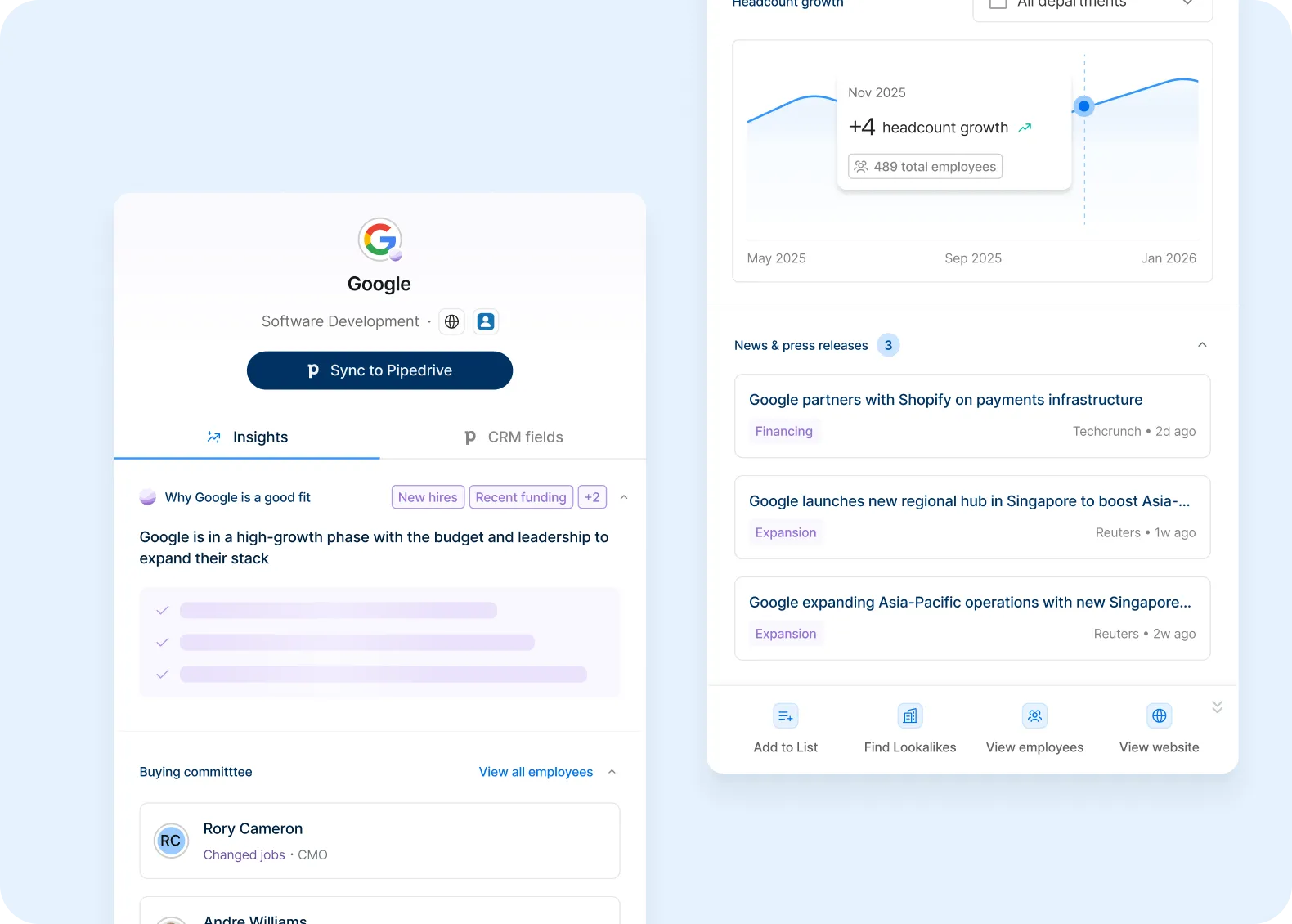
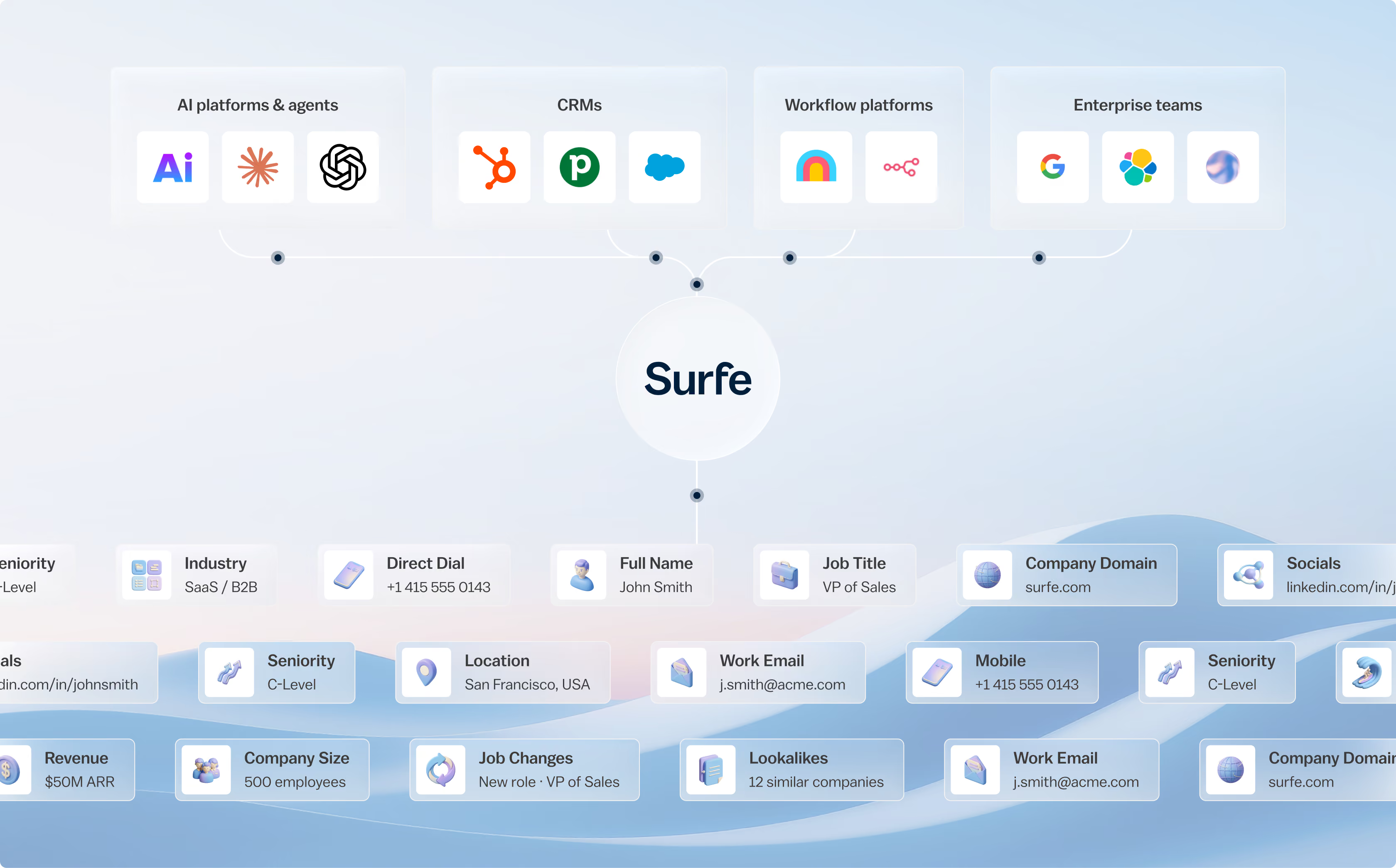
Tools like Surfe’s real-time enrichment layer can surface data quality gaps in your CRM automatically, flagging records that need attention before they reach your reps.
Step 2: Standardize Formats Across All Data Fields
Inconsistent formats are one of the most common and costly data quality issues in sales CRMs. Date formats entered three different ways. Phone numbers with and without country codes. Job titles that say “VP Sales,” “VP of Sales,” and “Vice President, Sales” — all for the same role.
Standardization means converting data to a consistent format, such as standardizing date formats, currency units, and naming conventions. This is foundational for your enrichment tools, your scoring models, and your segmentation logic. Consistent data is processable data. Inconsistent formats break automation and produce unreliable outputs downstream.
Enforce standardized processes at the point of entry — mandatory fields, dropdown menus instead of free-text, and validation rules that reject records that don’t meet your required format. Standardizing data at entry prevents “dirty” data from entering the system in the first place.
Step 3: Handle Missing Data with Intent
Missing values are unavoidable in any large dataset. The question isn’t whether they exist — it’s how you handle them. Your approach matters because different methods for handling missing data lead to different analytical outcomes.
The two main options are deletion and imputation. Deleting records with incomplete data is clean and simple, but it can introduce bias if the missing information isn’t random. Imputation — filling in missing values using methods like K-nearest neighbors (KNN) or multiple imputation — preserves your dataset’s size but requires careful validation.
Handle missing data by first understanding why it’s missing. Is it a data entry failure? A provider gap? A records decay issue? The root cause determines the right fix. For sales teams, the fastest path is usually automated enrichment: feed your incomplete records through a waterfall provider that can fill gaps using multiple sources in real time.
Step 4: Remove Duplicate Data Systematically
Duplicate data is the enemy of every outbound team. Reps calling the same contact twice, accounts enriched multiple times, scoring models counting the same signal repeatedly — it all compounds into wasted effort and inflated metrics.
Deduplication utilizes specialized software to scan and remove duplicate records. Automated workflow tools like OpenRefine or Talend can facilitate deduplication and format standardization at scale. For large datasets, fuzzy matching is often used to identify similar, non-identical entries — catching duplicates where the name is spelled slightly differently or a company name has been abbreviated.
The rule here: never deduplicate manually at scale. It creates new errors. Automate the detection logic, review the edge cases, and build deduplication into your ongoing data cleaning process rather than treating it as a one-time event.
Step 5: Validate, Then Validate Again
Regular validation throughout the data cleaning process is crucial for maintaining data integrity. After each cleaning step, run your records against your validation rules to confirm that corrections haven’t introduced new errors. Automated tools like dbt or Great Expectations can check for structural errors, null values, and data type inconsistencies at pipeline speed.
Build a feedback loop: every time a record fails validation post-cleaning, document why. That pattern data becomes the input for your next round of standardized processes and entry-point controls.
Which Data Cleaning Tools Actually Work at Scale?
The right data cleaning tools depend on your data volume, complexity, and the level of automation your team needs. Here’s a clear-eyed breakdown of what works where.
Open-Source and Commercial Wrangling Tools
OpenRefine is a popular open-source tool that provides a user-friendly interface for exploring, cleaning, and transforming messy data. It’s well-suited for ad-hoc cleaning projects, particularly when you’re dealing with inconsistent formats across large datasets. It won’t scale to real-time enrichment, but for structured cleaning projects, it’s excellent.
Trifacta is a commercial data wrangling platform that leverages machine learning algorithms to suggest data transformations and detect anomalies. For data teams managing complex, multi-source datasets, it brings serious automation power — recommending cleaning operations based on patterns it detects in your raw data.
Microsoft Excel remains the default for smaller teams running manual cleaning processes. It’s accessible and flexible, but it creates new risks: manual data transformation at scale is error-prone, and Excel files aren’t connected to your live CRM or enrichment systems.
Automated Data Cleansing Tools for Revenue Teams
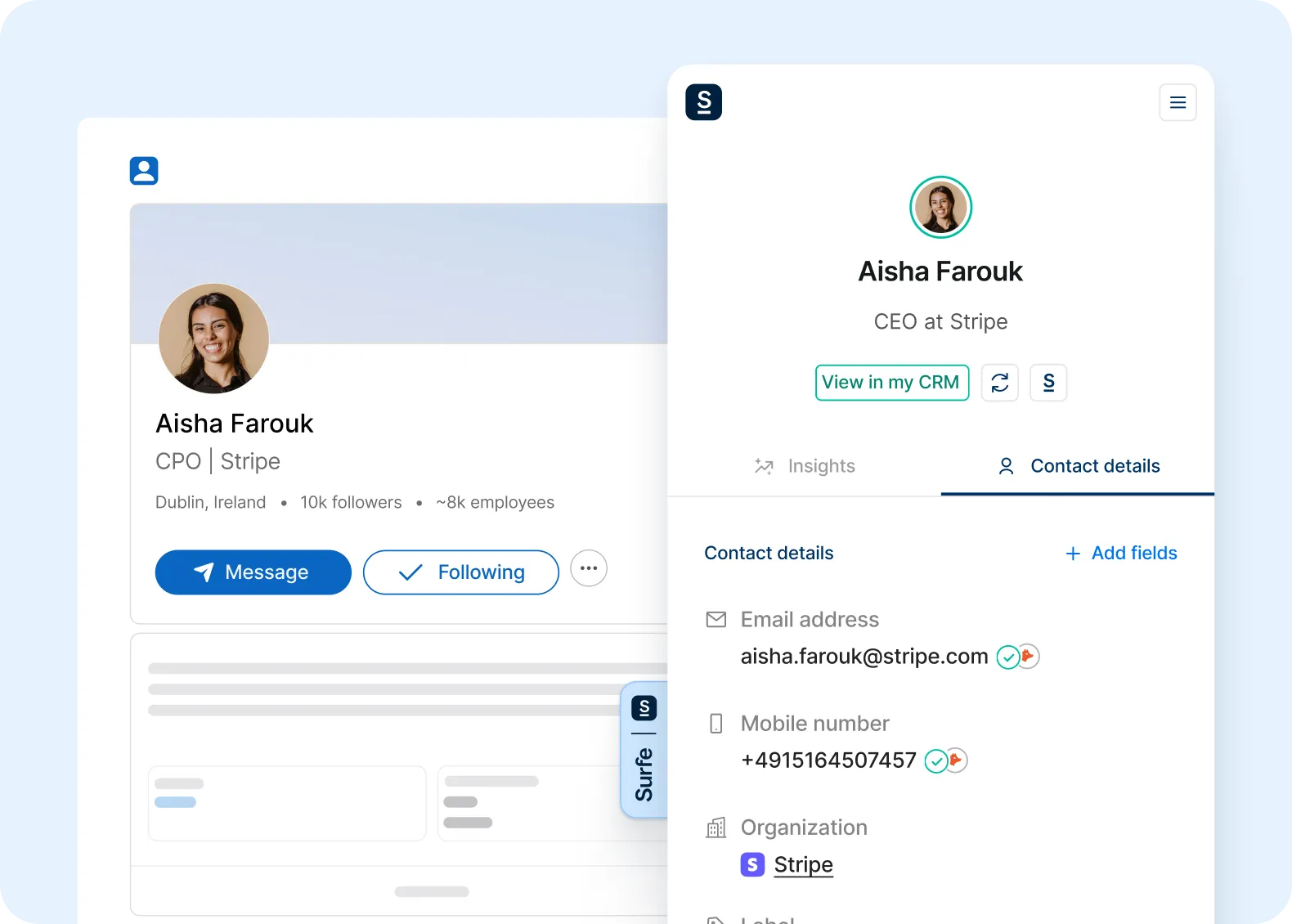
Automated data cleansing tools can save significant time and reduce the likelihood of errors, especially when dealing with large datasets or repetitive tasks. For revenue teams specifically, the highest-leverage automation is at the enrichment and sync layer — tools that clean data as it enters your CRM rather than waiting for a quarterly audit.
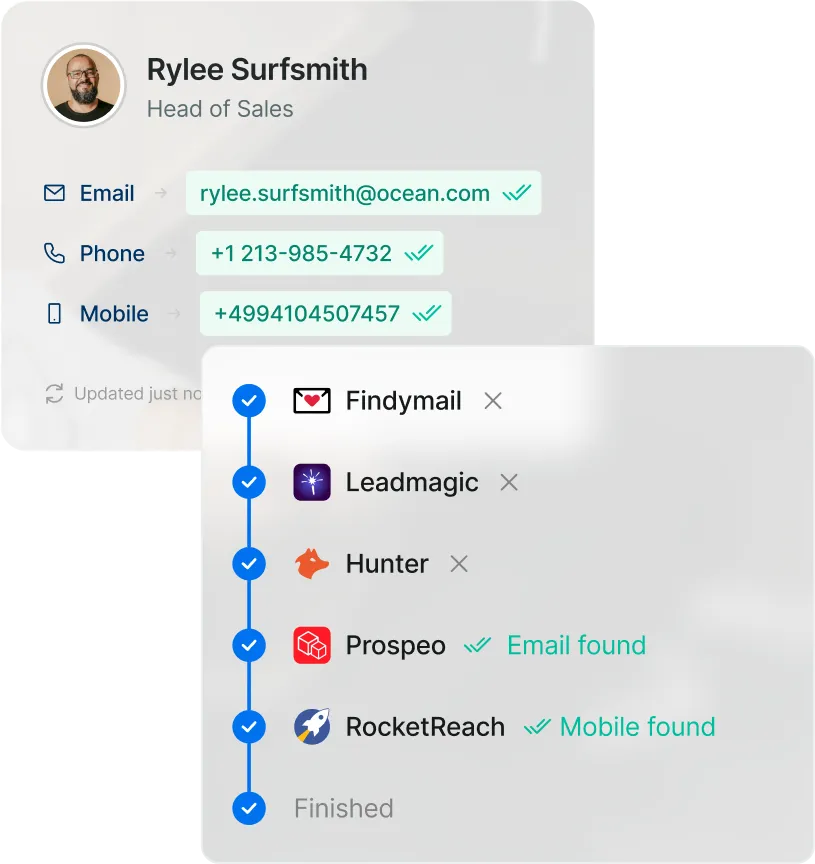
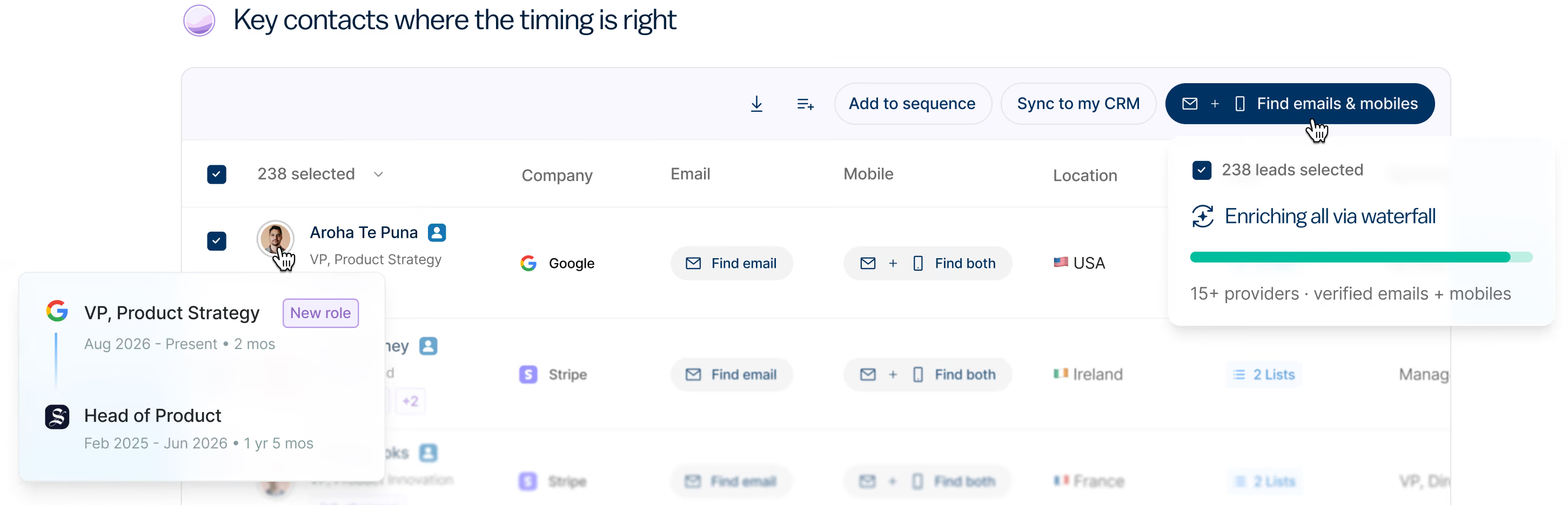
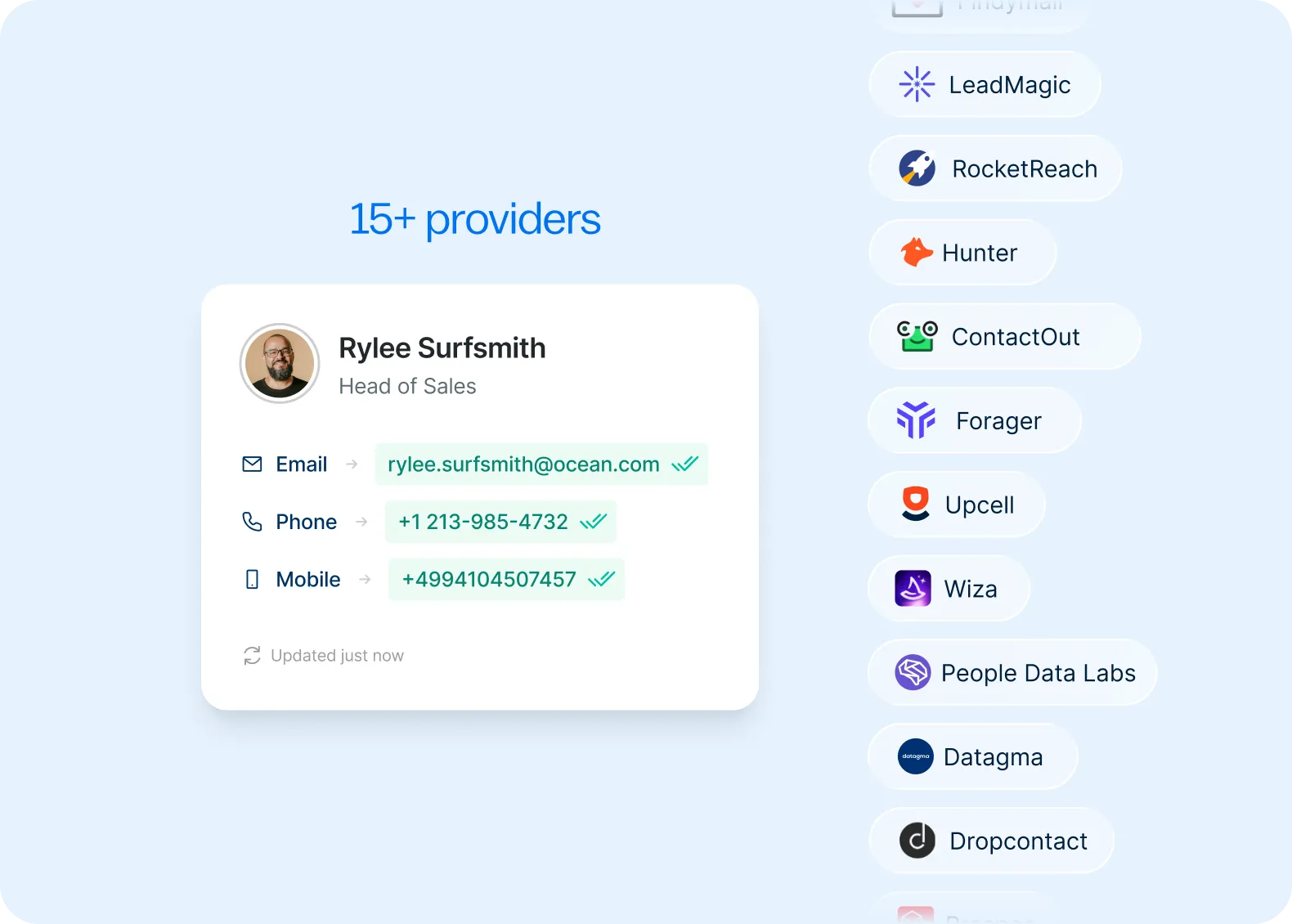
Surfe’s waterfall enrichment processes enrichment requests across 15+ data providers in under one second per contact — selecting the most reliable source for each specific search rather than pulling from a single static database. This means records are enriched, verified, and standardized before they ever reach a rep’s workflow. The cleaning happens upstream, automatically, as part of the data cleaning process itself.
Data observability tools can automatically monitor data pipelines from end-to-end to pinpoint issues in volume, schema, and freshness as soon as they occur — giving your data teams a real-time alert layer rather than discovering problems in a quarterly audit.
How Do You Build a Data Cleansing Strategy That Sticks?
A one-time data cleaning sprint doesn’t fix your data problem. It delays it. The teams that maintain high-quality data build it into their operating rhythm — not as a special project, but as a standardized, ongoing motion.
Establish data governance first. Define clear policies for data collection, storage, and ownership. Who is responsible for CRM hygiene? What are the mandatory fields for a record to be considered complete? What validation rules apply at the point of data entry? Without governance, data quality is left to chance — and chance always loses.
Quarantine invalid records rather than deleting them immediately. Quarantining invalid records helps manage problematic data instead of allowing it to block data pipelines. This gives your team time to investigate patterns in bad data before discarding records that might be recoverable.
Automate repetitive tasks wherever possible. The most common source of new errors in a data cleaning process is manual intervention at scale. Automate repetitive tasks — deduplication, format standardization, enrichment — and reserve human judgment for the edge cases and governance decisions.
Document every step. Documenting each step of the data cleaning process is crucial for reproducibility and collaboration. When your processes are documented, your team can onboard faster, audit more confidently, and hand off without creating new gaps.
Run routine data audits. Routine data audits help to fortify a culture of high-quality data and reduce discrepancies over time. Schedule them quarterly at minimum. Use data quality metrics — completeness rates, duplicate percentages, enrichment match rates — as the scorecard, not anecdotal rep feedback.
What Is the Business Impact of Clean Data on Revenue?
The ROI case for data cleansing best practices isn’t abstract. It shows up directly in the metrics revenue leaders care about most.
Better decision making starts with accurate inputs. When your ICP analysis, territory planning, and account scoring are all built on clean data, leaders make better calls. Organizations that prioritize data quality unlock the true potential of their data assets and drive meaningful results — not because the data is impressive, but because it’s trustworthy.
Reps reclaim selling time. Clean data reduces the time and resources spent on manual data correction and streamlines data-driven processes. When a rep doesn’t have to verify a phone number before making a call, or cross-reference a job title before sending a message, they stack more productive touches into their day. That compounds fast across a full SDR team.
AI and machine learning initiatives actually work. This is the edge case that’s becoming the mainstream case. As teams invest in AI-driven prospecting, recommendation models, and intent scoring, the quality of the underlying data determines the quality of the output. Surfe’s AI recommendation model — which learns from your CRM activity to prioritize and rank prospects — requires clean, consistent, and complete records to surface signals accurately. Garbage in, garbage out applies directly to AI initiatives: teams that invest in data cleansing first get dramatically better results from automation and machine learning.
Operational efficiency improves across every layer. From CRM reporting to marketing attribution to sales forecasting, clean data reduces friction, reduces rework, and makes every tool in your stack perform closer to its potential.
The Clean Data Imperative
Dirty data is a silent quota killer. It doesn’t announce itself. It just quietly degrades every decision your team makes, every model your AI runs, and every touch your reps invest in the wrong direction.
The teams that win in 2026 aren’t the ones with the biggest contact databases. They’re the ones whose data cleaning process is tight enough that when a signal surfaces, they can trust it — and move on it immediately.
Start with the basics: profile your data, standardize your formats, handle missing values systematically, automate your deduplication, and build governance that prevents new errors from entering your system. Then automate as much of that as possible so your team is focused on conversations, not cleanup.
Explore the full data enrichment ecosystem:
- Data Enrichment: The Complete Guide for Modern Revenue Teams
- B2B Lead Enrichment: The Complete Playbook for Revenue Teams That Want a Faster Pipeline
- Waterfall Data Enrichment: How Intelligent Source Orchestration Maximizes Your B2B Coverage
- CRM Data Quality: The Complete Guide to Clean, Accurate CRM Data
- Waterfall Enrichment vs Single Source Providers: Why One Source Is Never Enough
Get your first 20 leads enriched free. No credit card. Takes 30 seconds.