AI-Powered Prospecting: How Intelligent Enrichment Changes the Outbound Motion
AI-powered prospecting is the practice of using artificial intelligence to automate, prioritize, and personalize the process of identifying and engaging potential customers — replacing manual research, static lead lists, and disconnected tools with a single, signal-driven motion. For modern sales teams, it’s not an upgrade to the old process. It’s a fundamentally different game.
This page is for SDRs, BDRs, AEs, and revenue leaders who are done watching their best reps burn hours on research that should take seconds. If your sales prospecting process still relies on manual data entry, gut-feel prioritization, and batch-and-blast sequences, you’re competing in a market that has already moved. AI for sales prospecting changes what’s possible — not just how fast you can do the old thing, but what your team can see, act on, and close.
Here’s what you’ll take away: a clear understanding of how AI sales prospecting works, how data enrichment feeds the intelligence layer that makes AI prospecting effective, which AI prospecting tools actually move the needle, how to evaluate and integrate them into your existing workflow, and what separates intelligent orchestration from AI hype.
What Is AI-Powered Prospecting — and Why Does the Old Way No Longer Work?
Sales prospecting refers to the process of identifying potential buyers, qualifying them against your ICP, and initiating contact with the goal of building sales pipeline. For decades, that process ran on human effort: manual list-building, CRM lookups, LinkedIn searches, and hours of context-gathering before a single message was sent.
AI tools don’t simply accelerate that workflow. They restructure it entirely. Instead of a rep starting the day with a blank list and a best guess, AI-powered systems surface a ranked, context-rich hit list — prospects prioritized by likelihood to convert, enriched with verified contact data, and flagged with the intent signals that indicate buying readiness. The rep’s job shifts from research to execution.
The problem with the old way isn’t speed. It’s signal loss. Manual prospecting efforts are inherently backward-looking — reps work from static data that was accurate when it was pulled, not when it’s being used. By the time a sequence launches, the prospect has changed roles, the company has hit a funding event, or the window has closed. AI for sales prospecting closes that gap by operating continuously, not periodically.
Sales teams using AI report a 10–25% lift in pipeline and a revenue increase of up to 1.3 times compared to those without AI. That delta isn’t explained by reps sending more emails. It’s explained by reps sending the right message, to the right contact, at the right moment — because the system told them when the wave was building.
How Do AI Sales Prospecting Tools Actually Work?
Understanding the mechanics of AI sales prospecting tools matters because the market is crowded with tools that use “AI” as a label rather than an architecture. The distinction between genuine intelligence and automated noise is significant — and your results will depend on it.
AI for sales prospecting operates across five core functions:
- Lead identification and ICP matching. AI tools analyze behavioral signals, firmographic data, and technographic context to surface potential customers who fit your ideal customer profile — including micro-segments your team hasn’t manually identified. Machine learning can analyze patterns in your existing customer base to uncover hidden look-alike markets that manual profiling would miss.
- AI-powered lead scoring. AI-driven tools analyze historical sales data, prospect data, and customer behavior to rank prospects based on their likelihood to convert. This is predictive lead scoring in practice: instead of assigning scores based on static demographic rules, the model continuously recalibrates against real conversion outcomes. The result is a dynamic ranked list that reflects current market behavior, not last quarter’s assumptions.
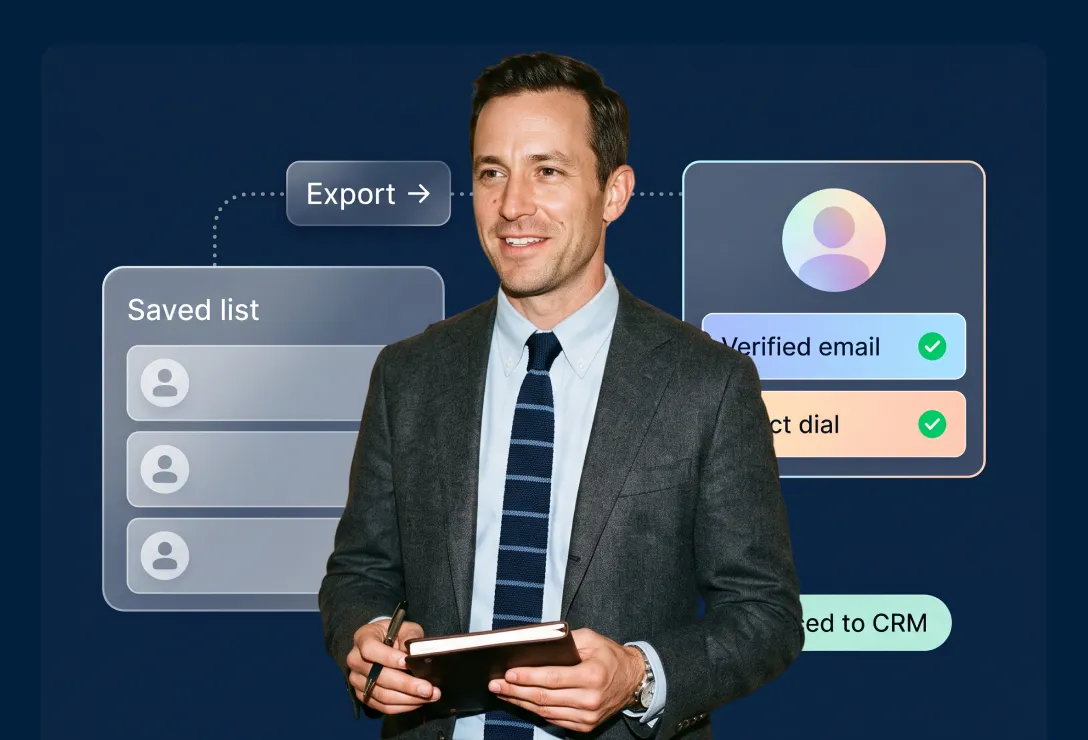
- Data enrichment and contact verification. AI tools can automatically enrich customer data by collating real-time company, pricing, or contact details — reducing the research burden on reps and ensuring that contact data is verified before outreach begins. Surfe’s enrichment engine cascades through 15+ providers in under one second per contact, using pre-enrichment logic, geography analysis, and real-time database quality scoring to select the most reliable source for each specific search. That’s not a source-count story. That’s an intelligence story.
- Personalized outreach generation. Generative AI enables context-aware personalization by creating tailored messages that reference a prospect’s specific pain points, recent company news, or behavioral triggers. Generative AI can draft initial outreach messages based on recent company news or prospect interests, allowing personalization at scale — without requiring a rep to spend 20 minutes on research per contact.
- Automated follow-up and CRM logging. AI tools can suggest next steps based on past interactions and deal progress, eliminating guesswork in follow-up. They can also automatically log key points from sales calls, meeting notes, and email exchanges directly into CRM systems — maintaining accurate records without manual input.
What Are the Key Features to Look for in AI Prospecting Tools?
Not all AI prospecting tools are built on the same infrastructure, and key features vary dramatically in their real-world impact. The questions that matter most when evaluating sales prospecting tools:
Does the tool enrich in real time or work from a static database?
Accurate data is time-sensitive. A contact record that was correct 90 days ago carries meaningful risk — job changes, company restructures, and funding events move fast. AI prospecting tools built on real-time data enrichment waterfalls outperform static database lookups on both coverage and accuracy. The key feature to probe here isn’t provider count — it’s the orchestration logic. How does the tool decide which source to use for each specific search? Does that decision improve over time?
How does the tool handle intent signals?
Intent signals — website engagement, content consumption, job change triggers, funding events — are the behavioral indicators that separate a prospect who’s ready to buy from one who fits your ICP but isn’t in market. Using behavioral indicators like website engagement is vital in recognizing prospects ready to buy. The strongest AI sales prospecting tools connect enrichment with signal detection, so the same system that verifies contact data also flags when a prospect’s buying behavior is accelerating.
How does the tool integrate with your existing CRM and tech stack?
AI tools that live outside your rep’s daily workflow don’t change rep behavior — they add another tab to close. AI tools should be centralized within the CRM to prevent data silos and reduce manual data entry time. Evaluate whether the tool writes back to your CRM in real time, whether it works within the rep’s existing browser environment, and whether it eliminates — rather than creates — manual tasks.
Does the tool support personalization at scale without sacrificing authenticity?
Broad profiles lead to generic, ineffective AI output. The tools that generate real lift on personalized outreach go beyond basic demographics — they pull from behavioral context, recent triggers, and ICP-specific signals to craft messages that reference a prospect’s actual situation. Human review of AI-generated content is necessary for high-stakes accounts to ensure authenticity — the best tools support this workflow rather than bypassing it.
How Does AI Change the Sales Prospecting Process for SDRs and AEs?
The shift AI for sales prospecting creates for sales reps isn’t incremental. It’s a change in what a productive day looks like.
Before AI, a high-performing SDR spent the first two to three hours of their day on research and data entry: building prospect lists, looking up contact details, cross-referencing LinkedIn for context, manually logging activity in the CRM. That’s not selling. That’s the administrative overhead that comes before selling.
AI’s ability to automate repetitive tasks allows sales reps to focus on fostering relationships and closing deals, transforming directly into sales conversions. When the system handles list-building, enrichment, scoring, and initial personalization, the rep’s morning looks different. They log in to a ranked, context-rich hit list. They see why each prospect is prioritized. They launch outreach with verified contact data and a suggested opening angle — and the CRM updates itself.
This means sales reps operate at a fundamentally different level of output — not because they’re working harder, but because the manual tasks that don’t move the needle have been removed from their workflow entirely. Underpinning this is waterfall data enrichment — a multi-source approach that maximises contact coverage and accuracy so the data feeding those workflows is reliable from the start.
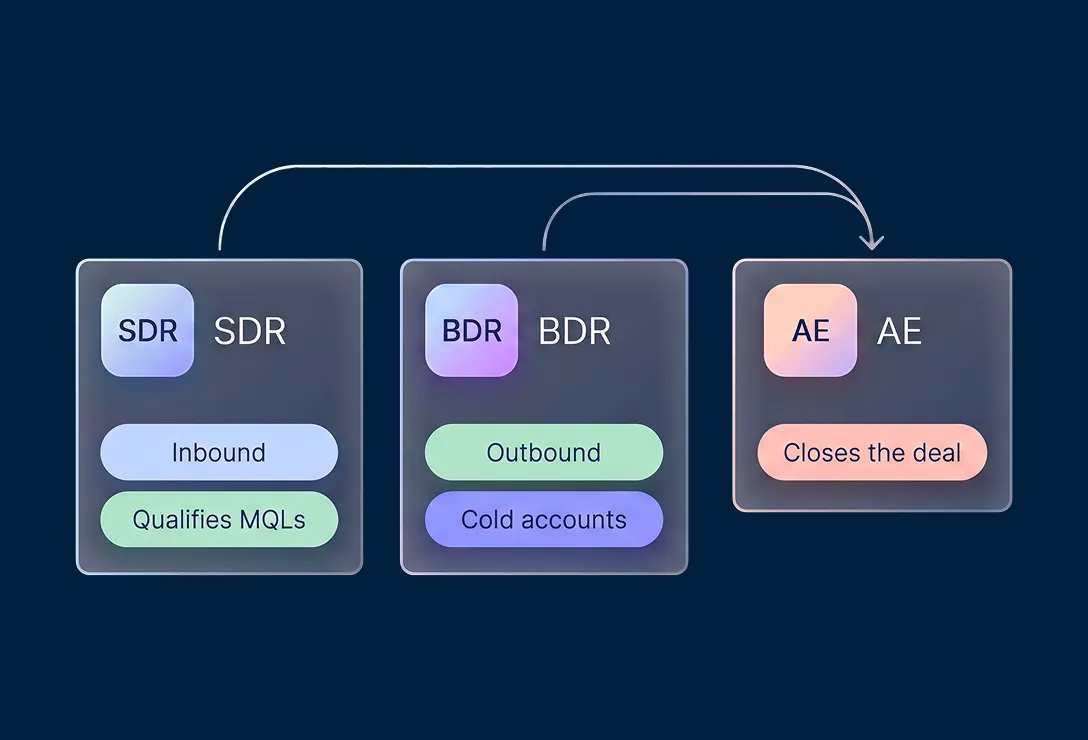
For sales development representatives, the impact is particularly pronounced. The rep who previously qualified 20 prospects a day can qualify 60 — with better context, higher contact accuracy, and more relevant messaging. For AEs self-sourcing pipeline, AI removes the research bottleneck that typically limits prospecting to whatever time is left after account management.
Sales teams using AI for personalized outreach report higher conversion rates compared to those using traditional methods. The mechanism is straightforward: higher data quality + better timing + contextual personalization = more replies, more meetings, more pipeline.
How Do AI Agents Fit Into the Prospecting Process?
AI agents represent the next evolution beyond AI-assisted prospecting. Where traditional AI tools surface recommendations and automate discrete tasks, AI agents act as autonomous operators — executing multi-step workflows without manual intervention at each stage.
In the context of outbound sales, AI agents can compile public filings, press releases, and job change signals to prepare actionable call briefs. They can trigger enrichment sequences when a target account hits a predefined signal threshold. They can automate outreach across sequences based on engagement behavior, updating the CRM at each step without rep involvement.
AI agents act most effectively when they’re connected to a high-quality data layer. The effectiveness of AI is directly linked to the quality of input data — garbage in, garbage out. An agent operating on stale CRM data or unverified contact records will execute flawed workflows at scale. The prerequisite for effective AI agency is clean, enriched, continuously updated prospect data.
Building dynamic Ideal Customer Profiles using behavioral data is the foundation of effective AI-powered prospecting. When your ICP definition is static — defined once in a spreadsheet and never updated — AI agents optimize against an outdated target. When ICP matching is driven by behavioral data that updates continuously, agents get smarter over time.
Integrating AI tools into the CRM prevents data silos and automates logging — ensuring that everything an AI agent executes is visible, auditable, and connected to the rep’s working environment. This is the difference between automation that helps and automation that creates opacity.
What Are the Biggest Challenges When Implementing AI in Your Sales Prospecting Process?
Implementing AI in the sales prospecting process is not a plug-and-play event. Revenue teams that treat it as a tool rollout rather than a workflow transformation consistently underperform those who design for adoption from the start.
Data quality is the upstream variable
The effectiveness of AI is directly linked to the quality of input data. Before integrating AI tools into your prospecting motion, your CRM data needs to be cleaned — duplicates removed, entries standardized, stale records flagged. Cleaning CRM data by removing duplicates and standardizing entries is necessary before implementing AI. AI amplifies what’s already in your data. If your CRM systems are full of noise, the output will be faster noise.
Internal resistance is predictable — plan for it
Internal resistance to AI adoption is common among experienced sales reps due to established habits. Reps who have built their own prospecting workflows over years don’t abandon them because the tool dashboard says they should. Running small-scale pilots to test AI tools can help demonstrate ROI before a full-scale rollout — letting results do the change management work that mandates cannot.
Compliance cannot be an afterthought
Ensuring AI tools comply with data privacy regulations is crucial for secure data usage. For enterprise organizations and any team touching EU contacts, every data source your AI enrichment layer pulls from needs documented legal basis. Compliance gaps surface during procurement reviews — after you’ve already built a workflow dependency on the tool. Vet before you integrate, not after.
Define KPIs before you launch
Establishing clear KPIs allows tracking of metrics like lead-to-opportunity conversion rates to demonstrate the value of AI tools. Without baseline measurements and clearly defined success metrics, AI adoption becomes a faith exercise — and faith exercises lose budget arguments. Measure lead-to-opportunity conversion rate, contact accuracy rate, time-to-first-outreach, and reply rate before and after rollout.
How Does AI-Powered Prospecting Connect to Data Enrichment?
AI sales prospecting and data enrichment are not separate workflows. They’re the same motion at different stages. The quality of every AI output — lead scores, personalized messages, recommended next actions — is determined entirely by the quality of the enriched data feeding it.
When data enrichment operates at the intelligence layer — not just appending attributes, but selecting the right source for each specific search, validating across providers, and updating continuously — it becomes the foundation on which every AI prospecting function runs. Surfe’s CEO David Chevalier frames this precisely: “It’s not about 15 or 20 data providers. It’s about the model behind what provider to choose for your particular search.”
AI-powered sales tools that separate enrichment from prospecting create a gap their outputs have to compensate for. The most effective AI prospecting platform architectures treat enrichment as a live, continuous process — not a batch operation that precedes prospecting. Integrating AI into CRM automates lead research, scoring, and personalization while maintaining human oversight. That integration is what closes the loop between data quality and sales execution.
For revenue teams evaluating their tech stack, the question is not “which enrichment tool do we use alongside our AI prospecting tool?” It’s: “does our prospecting intelligence run on a data layer that’s intelligent enough to trust?” The answer to that question determines whether AI sales efforts translate into pipeline — or just volume.
Explore the full cluster:
- Data Enrichment: The Complete Guide for Modern Revenue Teams
- B2B Lead Enrichment: The Complete Playbook for Revenue Teams That Want a Faster Pipeline
- Waterfall Data Enrichment: How Intelligent Source Orchestration Maximizes Your B2B Coverage
- Data Cleansing Best Practices: How to Build a Clean, Revenue-Ready Pipeline
- CRM Data Quality: The Complete Guide to Clean, Accurate CRM Data
- Waterfall Enrichment vs Single Source Providers: Why One Source Is Never Enough
Get your first 20 leads enriched free. No credit card. Takes 30 seconds.