






How to Build a Lead Scoring Model That Actually Improves Conversions
Here’s a hard truth about working in sales: you have to work with people.
Now, don’t get us wrong – we like people. Most of the time, anyway. But they are unpredictable. And unpredictable things are harder to manage.
Let’s take lead scoring as an example. You might have spent days, or even weeks, crafting the perfect lead scoring model to prioritize sales leads. But if it’s too rigid or rule-based, it’s not going to work – because buying intent isn’t rigid or rule-based.
Instead, you need something different. Something that still lets you prioritize leads for maximum conversion potential – but is dynamic and flexible enough to keep up with changing sales processes and shifting buyer behavior.
It’s still a lead scoring model, but one that will genuinely drive better conversions and optimize sales efficiency. And we’re going to talk about how to build a good one today:
- Define Lead Scoring Based on More Than Just Demographics
- Build Lead Scoring Models Around Key Business Metrics
- Implement a Scoring System That Prioritizes Key Behaviors
- Collaborate With Marketing to Define Scoring Criteria
- Automate Lead Scoring With Data Enrichment and Integrations
- Use Scoring to Streamline Handoffs and Improve Follow-ups
By the time you’ve finished reading, you’ll be able to build a well-crafted scoring system that can better align sales teams with qualified prospects, improve conversion rates, and enhance pipeline management.
Ready? Let’s get going 👇
Define Lead Scoring Based on More Than Just Demographics
If your current lead scoring model is basically “senior title at a big company = good,” it’s time for an upgrade. Yes, demographics matter – but they don’t tell you who’s actually ready to buy. To take a very basic example, a Marketing Director at a Fortune 500 might look great on paper, but if they’ve never opened an email or visited your site, what’s the point?
Modern lead scoring needs to combine who someone is with what they’re doing. Look at behavioral signals like LinkedIn activity, website visits, or whether they visited your pricing page.
Hint: data enrichment tools can fill your lead records with real time engagement data so your model isn’t just ranking based on titles – it’s ranking based on intent. We like it.
Build Lead Scoring Models Around Key Business Metrics
Your lead scoring model should do more than make you look busy. It should map directly to your sales goals. Want to shorten the sales cycle? Score leads higher when they interact with bottom-of-funnel content. Looking to grow average deal size? Bump scores for leads at enterprise companies (who actually engage with your business, of course). Pull in CRM data like deal velocity, past purchase behavior, or sales rep notes to add layers of context.
A scoring model that aligns with your business metrics is the difference between stumbling around blindly and closing real deals.
Implement a Scoring System That Prioritizes Key Behaviors
Time to get behavioral. The best lead scoring models are like behavioral psychologists – they don’t just care who your leads are, but what they do, too.
Focus your scoring on actions that show real interest. Things like:
- Opening your last three emails
- Visiting your pricing page twice in a week
- Checking out your case studies at 11 p.m. (a classic “I’m ready to buy” move)
Hey – you know who can help with that? Surfe! By enriching your CRM with real time data on lead activity, you can automate scoring triggers that flag when a lead’s warming up. Combine that with your sales cadence, and boom – your team’s reaching out exactly when it counts. Clever, right?
Collaborate With Marketing to Define Scoring Criteria
Here’s a fun experiment: ask marketing and sales separately what makes a “qualified lead.” Most people won’t admit this, but you’re likely to get two very different answers. That’s why your lead scoring model should never be built in a vacuum.
Sales and marketing need to agree on what matters – and that requires ongoing convos, not just a kickoff workshop and radio silence. Set up regular syncs to review conversion patterns, feedback from reps, and any surprises in the data. Did someone with a low score close a huge deal? Time to revisit your weights.
Scoring criteria should be a living, breathing thing. Like your leads, it needs attention, nurturing, and the occasional course correction.
Automate Lead Scoring With Data Enrichment and Integrations
Manual lead scoring is a one-way ticket to burnout. Automating it? That’s where things get interesting – and scalable.
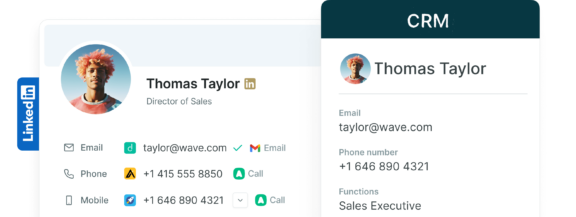
Use a tool like Surfe (hello) to enrich lead profiles in real time. As soon as you spot a promising contact on LinkedIn, Surfe can pull in their verified contact details, role, and even behavioral data directly into your CRM. Add in automation platforms like HubSpot, Salesforce, or Pipedrive, and you’ve got a model that updates itself while you sip your coffee.
Automation ensures your scores are accurate, consistent, and always up-to-date with zero extra effort.
Use Scoring to Streamline Handoffs and Improve Follow-ups
You’ve got the perfect lead scoring system. Next up, making sure it actually gets used.
When a lead hits a certain threshold, your CRM should trigger an alert or task for sales to swoop in – armed with context, enriched data, and the confidence that this lead is actually worth their time.
Just as importantly, scoring should tell reps when not to follow up. No more wasting hours on tire-kickers who just wanted your free download. It’s about efficiency as much as effectiveness.
Regularly review how well these handoffs are performing. Are MQLs turning into opportunities? Are reps ghosting low scorers who later convert? Adjust accordingly, and you’ll build a system that gets sharper over time.
Let’s Wrap It Up!
A dynamic lead scoring model can take working with people from annoying to amazing. You’ll spend less time figuring out why they didn’t do what your old-school lead scoring model said they’d do, and more time making decisions that align with your goals and improve conversions.
Remember, lead scoring isn’t a one-size-fits-all approach. Adapt it to your business and your audience, use automated tools and data enrichment to refine, and you’ll be well on your way to sales stardom.
Ready to build a lead scoring model that actually works?
First things first: sign up for Surfe.
FAQs About Lead Scoring Models
What Is a Lead Scoring Model?
A lead scoring model is a system that ranks leads based on how likely they are to become customers. Traditional models use firmographics like job title or company size – but modern ones go further. They factor in behavior, like email opens or pricing page visits, to measure real intent. Think of it as your BS detector for inbound leads: it helps sales teams focus on contacts who are actually worth chasing, not just the ones who downloaded an eBook three months ago. A good model saves time, improves conversions, and keeps your pipeline full of people who are ready to talk.
Why Do Traditional Lead Scoring Models Often Fail?
Traditional lead scoring models often miss the mark because they rely too heavily on relatively static criteria – like seniority or company size – while ignoring actual buying signals. A VP who never visits your site isn’t necessarily a better lead than a mid-level manager who binge-reads your case studies at midnight. When your model can’t account for behavior, it ranks the wrong leads – and your sales team ends up chasing people who aren’t going to buy. To fix it, combine demographics and engagement. Add behavioral triggers, real time enrichment, and automation. That’s how you score leads that actually want to buy, not just look good on paper.
How Do You Build a Lead Scoring Model That Improves Conversions?
Start by combining demographic data with behavioral insights. Yes, job title and company size matter – but actions speak louder. Score higher for signals like repeated site visits, email engagement, or demo requests. Then, align your model with your business goals. Want to shorten the sales cycle? Score based on funnel stage interactions. Automate the whole process using tools like Surfe to pull in enriched, real time data. Finally, collaborate with marketing to keep the model updated and relevant. Simple.
What Behaviors Should Be Prioritized in a Lead Scoring Model?
The best lead scoring models prioritize behaviors that show actual intent. Think: repeated email opens, clicking the pricing page, filling out contact forms, or revisiting your site in the same week. These are all surefire signs your lead’s warming up. Bonus points if they browse case studies or product pages. Tools like Surfe can track this behavior and update scores in real time, so your reps always know when the iron’s hot. TL;DR: Score what they do, not just who they are.
How Can Automation Improve a Lead Scoring Model?
Automation makes your lead scoring model smarter, faster, and way less of a time suck. It pulls in enriched data (like job titles or engagement history) and updates scores in real time – no spreadsheets required. Tools like Surfe sync with your CRM, track behavior as it happens, and trigger workflows when a lead crosses a certain threshold. That means sales gets notified exactly when to reach out – no more guessing, no more ghosting. Automation turns your lead scoring model from “meh” to massively useful.