






Sales Tech Stack Essentials for Scaling Outbound Teams
Had a slip-up at work recently?
Whether it was something small, like sending an email to a voided email address, or something big, like being way, way off target for the quarter, one thing’s for sure.
It happens to all of us.
After all, if we were all perfect all the time, none of us would be at work right now. Instead, we’d be sitting on the beach, sipping a tropical drink, and enjoying our millions sitting in the bank.
That said, you shouldn’t ignore things going wrong just because they happen to everyone. Instead, you should use them to take stock of what went wrong. One of the most likely culprits? Your systems.
If your tech stack is bloated, disconnected, or just doesn’t work, your reps are going to waste time, and managers won’t have the proper oversight they need. That’s not a problem anybody wants – so we wrote this blog post to fix it. We’re going to break down the essential categories of a modern outbound sales tech stack, and what to look for in each — from data providers and sequencing tools to platforms that simplify LinkedIn prospecting without adding extra tabs or manual steps. Here’s what’s coming up:
- CRM
- Data Discovery
- Contact Data Enrichment
- Outreach and Engagement
- Productivity + Workflow Automation
- Enablement + Intelligence
- What To Avoid in Your Stack
By the time you’ve finished reading, you’ll understand the core tech stack categories that support repeatable outbound – and be able to make smarter decisions that scale with your team as a result.
Let’s get started.
6 Essential Categories of a Modern Outbound Sales Tech Stack
First things first, what categories should your outbound sales tech stack cover? Let’s take a look:
1. CRM (Your Source of Truth)
Your CRM is the glue of your sales tech stack. It should be the one place your team trusts for clean, up-to-date data – not a graveyard of half-filled fields and guesswork.
Salesforce, HubSpot, and Pipedrive are popular for a reason – but only if your reps actually use them. That’s the catch.
To make that happen, reduce the manual work involved in CRM upkeep. After all, if your CRM isn’t the source of truth it’s just another place to lose track of sales leads.
2. Data Discovery (People + Companies)
If sales reps are spending half the day bouncing between tools just to build a prospect list, your data discovery setup needs a rethink.
This part of your sales tech stack should answer two things fast:
- Who should we reach out to?
- And why them, now?
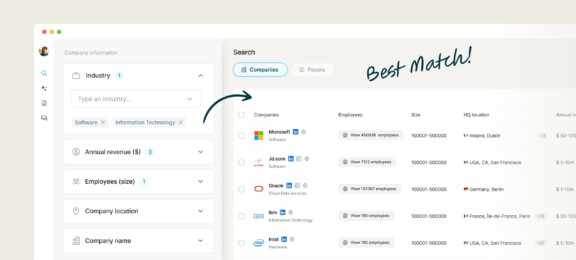
The best tools let you filter by firmographics, technographics, intent signals, and more – so reps spend less time digging and more time selling. Want an example? You’d be hard-pressed to find a better option than Surfe’s (heya!) People and Company Search features. Both options have advanced filtering options – think role, seniority, and team for People Search, and headcount, revenue, and tech stack for Company Search, to name just a few – so you can pinpoint new businesses that are a great fit.
3. Contact Data Enrichment
You’ve found the right companies and contacts – great. But if the emails bounce and phone numbers go nowhere, all that effort turns into a whole lot of nothing.
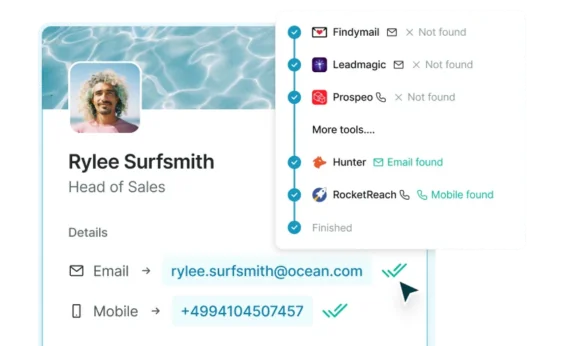
This part of your sales tech stack should make sure every lead is actually reachable. Look for tools that offer both real-time and bulk enrichment, and use multiple data sources to validate contact info.
Bonus points if they integrate with your CRM – saving your reps from CSV downloads, copy-pasting, and switching between tabs.
Surfe’s Chrome extension (hey again) makes contact data enrichment easy. With enrichment built into where your reps prospect (LinkedIn and their email), they can grab verified email addresses and phone numbers without ever breaking their rhythm. Whether you’re working a list or just spotted a hot lead on LinkedIn, you’ll have the data to reach out confidently.
Because nothing kills momentum like “email undeliverable.”
4. Outreach + Engagement
This is where the magic happens – or where perfectly good leads go to die.
Outreach tools should help your reps move fast without sounding like robots. Think multi-touch, multi-channel, and easy outreach personalization across email, LinkedIn, and phone. If any of these aren’t supported, the tech is slowing your team down.
Sequencing is the baseline, but good engagement tools go further. Look for clear tracking, reply detection, and easy task management so reps always know who’s next and what to say.
Looking for a rec? We like Salesloft, Outreach, or Lemlist, depending on where your business is at.
5. Productivity + Workflow Automation
This layer of your sales tech stack isn’t about bells and whistles – it’s about making annoying bumps in the road disappear.
Think: autofilling contact details, logging messages automatically, syncing LinkedIn to your CRM. The goal here is fewer clicks, fewer tabs, and way less manual admin.
Good workflow automation tools should act like an extra pair of hands, not an extra app to babysit. If your reps are still juggling spreadsheets or copy-pasting data between tools, something’s not working.
Zapier’s great for stitching things together. And Chrome extensions that slot into your team’s existing workflow – without adding friction – will be a big win.
Because less admin = more time selling. And that’s kind of the point, right?
6. Enablement + Intelligence
Reps don’t need more dashboards. They need the right info, at the right time, in a format that actually helps them sell.
This part of your sales tech stack should surface insights that make your team smarter – like which accounts are heating up, what messaging lands, or when someone changes jobs. Collaborating with experienced MEAN Stack Developers can also help tailor these tools to deliver insights more effectively and in real time.
Call recording tools like Gong or Chorus are solid bets here, especially when paired with alerts, analytics, and AI voice-driven nudges (yes, the useful kind).
These tools become more valuable as your team and pipeline grow. When you’re scaling, spotting patterns early can mean the difference between a deal won and a deal lost.
What to Avoid in Your Stack
Now you know what to look for, here’s what to avoid.
More tools ≠ more output. A bloated sales tech stack will mean more logins, more silos, and more chances for things to fall through the cracks.
Here’s what to watch out for:
- Tool bloat: if your reps need a checklist just to start prospecting, it’s too much
- Disconnected systems: if tools don’t talk to each other, your data’s already outdated
- Manual workarounds: if reps are using spreadsheets outside your CRM, something’s broken
- Complex reporting setups: if insights require a full-time analyst to interpret, nobody’s going to use them
The best stacks feel invisible. Everything just works – because reps aren’t wasting time figuring out your systems. Simple!
Let’s Wrap It Up!
Things are always going to go wrong at work (that’s life, unfortunately). But if you have the right tech stack for your outbound team, they’re likely to go wrong a lot less.
Think in systems, not tools, and choose a tech stack that integrates well, reduces manual work, and helps reps stay focused. After all, a tight, well-integrated sales tech stack is what makes your first 3 reps productive 0 and your next 30 scalable.
The first item in your new sales tech stack?
It’s Surfe, duh. Hit the button below to get going.
FAQs About Sales Tech Stack Essentials
What Is a Sales Tech Stack?
A sales tech stack is the collection of software tools your sales team uses to prospect, engage, and close deals. Think of it as the behind-the-scenes engine powering your reps – from your CRM to outreach tools to enrichment and automation layers. A good stack isn’t about having the most tools – it’s about having the right ones that work together, reduce manual work, and give reps the insights they need to sell smarter.
Why Does a Sales Tech Stack Matter for Outbound Teams?
Your sales tech stack can make or break your outbound motion. If it’s bloated or disconnected, reps waste time chasing data or manually updating systems – time they could spend selling. A strong stack supports repeatable prospecting, clean data, and consistent outreach, and should help your team work faster, stay focused, and scale effectively. In short: better systems = more closed deals. If your stack’s slowing your reps down, it’s time for a rethink.
What Tools Should Be in a Sales Tech Stack?
A modern sales tech stack should cover six core categories:
- CRM
- Data discovery
- Contact data enrichment
- Outreach and engagement
- Productivity and workflow automation
- Enablement and intelligence
These categories cover everything from identifying leads to closing deals – and help you build a stack that scales. Bonus points if your tools integrate well, automate admin, and keep reps in their flow.
How Do I Choose the Right Sales Tech Stack?
Start with the essentials: what does your team actually need to hit their targets? Then work backwards. Prioritize tools that reduce friction, integrate easily, and actually get used (yes, usage matters more than features). Don’t chase hype – focus on systems that support your sales process today and can be flexible as your team grows. And remember: fewer tools that integrate perfectly beat 15 logins and three Chrome crashes a day.
What Should I Avoid in a Sales Tech Stack?
Avoid tool bloat and disconnected systems. If your reps need a manual just to start their day, your stack’s too complicated. Watch for workarounds like spreadsheets or double-entry – those are signs something could be simpler. Also, skip tools that don’t talk to each other or require full-time reporting clean-up on the reg. The best stacks feel invisible. Everything just works – so your reps can focus on conversations, not configurations.